Why is my wall still wet days after the leak stopped?
A leak that has been fixed can still leave drywall, insulation and framing holding water. The surface may look dry while the paper face of the drywall, the insulation behind it and the bottom plate of the wall stay damp for days.
That hidden moisture is what water mitigation is built to find and remove. The trade name sounds technical, but the job is simple: locate every wet material, pull the water out, and dry the structure on a schedule so you are not rebuilding more than you must.
When standing water is an emergency
Standing water is an emergency when it is deeper than a damp patch, when it is moving into a second room, or when it touches an outlet, a baseboard heater or a panel. Water that has been sitting for more than a day also changes category, because bacteria multiply in it.
If you smell sewage, see a brown or gray tint, or the water came up through a floor drain, treat it as contaminated. Keep children and pets out of it and call the line before you start cleaning. Crews work nights and weekends on these calls, and a same-day visit is offered when a crew is free.
What to do while you wait for the crew
These steps are safe for most homeowners and cost nothing. Skip any step that needs you to stand in water near electrical equipment.
- Shut off the main water valve or the supply valve at the fixture that failed.
- Turn off power to wet areas at the panel only if the panel is dry and you can reach it without stepping in water. Otherwise call the utility or 911.
- Lift rugs, books, electronics and small furniture onto dry surfaces or foil blocks.
- Take photos and short videos of every wet area before anything is moved.
- Open interior doors and cabinet doors so air can reach wet wall cavities.
- Keep people and pets out of any water that may be contaminated.
How a mitigation visit works
A mitigation visit follows the same order on almost every job, because each step makes the next one possible. The crew explains the scope and price before work starts.
- Find the source. The crew confirms the leak is stopped or helps you stop it, then checks nearby rooms, the ceiling below and the cabinets around the fixture.
- Map the moisture. Moisture meters and a thermal camera show which drywall, flooring and framing are wet, and where water travelled beyond the visible stain.
- Remove the water. Pumps and extraction units pull standing water and water held in carpet and pad. Materials that cannot dry in place are cut out and bagged.
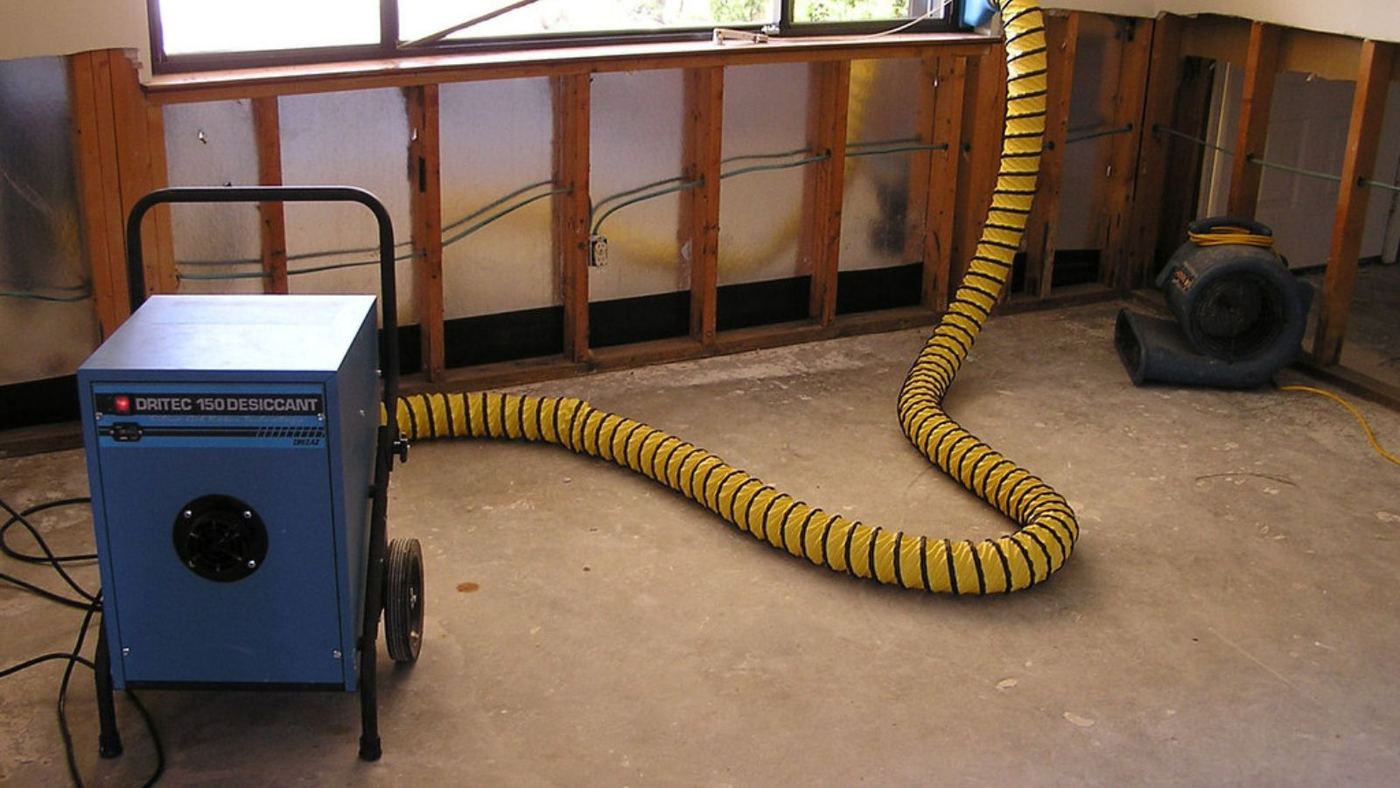
- Set the drying system. Air movers push dry air across wet surfaces while LGR dehumidifiers pull moisture out of the air. Equipment placement follows the moisture map, not a fixed pattern.
- Monitor until dry. Readings are taken again on later visits and recorded in a drying log. Equipment comes out only when the readings reach the dry standard for that material.
Need a crew for a wet wall or floor?
The 24/7 line connects you with dispatch for Culver City.
Water categories and what they change
The industry standard for water damage, ANSI/IICRC S500, sorts water into three categories by how contaminated it is. The category decides what can be dried in place and what must be removed.
| Category | Typical source | What it usually means |
|---|---|---|
| Category 1 | A broken supply line, a failed washing machine hose, an overflowing sink with clean water. | Clean at the source. Most materials can be dried in place if the work starts quickly. |
| Category 2 | Dishwasher or washing machine discharge, a toilet overflow with urine only. | Contains contaminants. Carpet pad and porous materials are often removed, hard surfaces cleaned. |
| Category 3 | Sewage, floodwater from outside, long-standing water. | Grossly contaminated. Porous materials come out and surfaces are cleaned and treated. |
You can ask any company whether its crews work to S500. Water that begins as Category 1 can slide into Category 2 or 3 if it sits, which is another reason to call early.
Structural drying: why equipment stays for days
Structural drying is the part of mitigation that surprises people. Removing the puddle takes an hour. Getting framing, subfloor and the back of drywall down to normal moisture takes days, because water moves into dense materials slowly and leaves the same way.
A drying setup typically combines air movers, one or more LGR dehumidifiers and sometimes a desiccant unit for cooler or enclosed spaces. The crew adjusts the setup as readings change, moving air movers off areas that have reached target and onto stubborn spots.
The EPA says in its guide to mold and moisture that water-damaged areas and items should be dried within 24 to 48 hours to prevent mold growth. That window is the reason mitigation is treated as urgent even when the damage looks small. If you want to understand what drying involves before you commit, ask the crew to show you the readings and the equipment plan.
What sets the price of a mitigation job
Prices depend on the job, not a flat rate, so no figure here would be honest. These five factors move the number the most, and the crew walks through them with you before work starts.
Water category
Clean water is the least costly to handle. Category 2 and 3 water add removal and cleaning steps.
Affected area
More rooms and more wet wall height mean more drying equipment and more labor.
Materials involved
Hardwood, plaster and insulation dry differently from carpet and plain drywall.
Drying days
Equipment is placed for a number of days that depends on readings and conditions.
Access and demolition
Cabinets, tile and tight crawl spaces change how much can be dried in place.
Insurance and mitigation records
Sudden and accidental water damage, such as a burst pipe, is often covered by a homeowners policy. Gradual leaks and neglect often are not, and flood damage is usually excluded and needs separate flood coverage. Check your policy and ask your insurer what applies to your loss.
Whatever the answer, records help. Photos before cleanup, moisture readings and the drying log give you a clear paper trail to share with your insurer. Want your real number for the job? Call (424) 550-5662 and describe what you see.
Culver City details that matter during a leak
Water in Culver City comes through the Culver City system run by Golden State Water Company, which says on its Culver City page that customer support is available 24 hours a day at 1-800-999-4033. If you cannot find or turn your shutoff valve, that is the number to try for the meter side of the line.
Repairs that follow mitigation may need a permit. The city's Building Safety Division lists permits for new or replacement water piping, sewer line repair and water heater replacement, and it says stopping leaks without replacing pipe does not need one. Ask the division at (310) 253-5800 before a plumber opens a wall.
Water mitigation questions from Culver City homeowners
Water mitigation is the first phase of water damage work. It covers stopping the source, removing standing water, finding hidden moisture and drying the structure. Rebuilding comes later, once the materials are dry.
Yes. The dispatch line is open 24/7, including nights, weekends and holidays. A same-day visit is offered when a crew is available, and the dispatcher tells you honestly what to expect rather than promising an arrival time.
Most jobs run several days, and the exact number comes from moisture readings taken during the visits. Dense materials such as hardwood and framing take longer than carpet or drywall. The crew records readings so the end point is measured, not guessed.
Household fans help with a small, clean spill that you caught within hours. They do not reach water inside walls, and a home dehumidifier is not sized for a wet structure. If water has been present for a day or more, ask for a moisture check.
Sometimes. Drywall that stayed wet, insulation soaked with water and baseboards over wet cavities are often opened so air can reach the framing. The crew points to the readings that justify each cut before it is made.
Yes. Crews dispatch to Marina del Rey, and you can read about that service on the Marina del Rey water damage page. Mitigation steps are the same, although permits and utilities there follow Los Angeles County rather than the city.