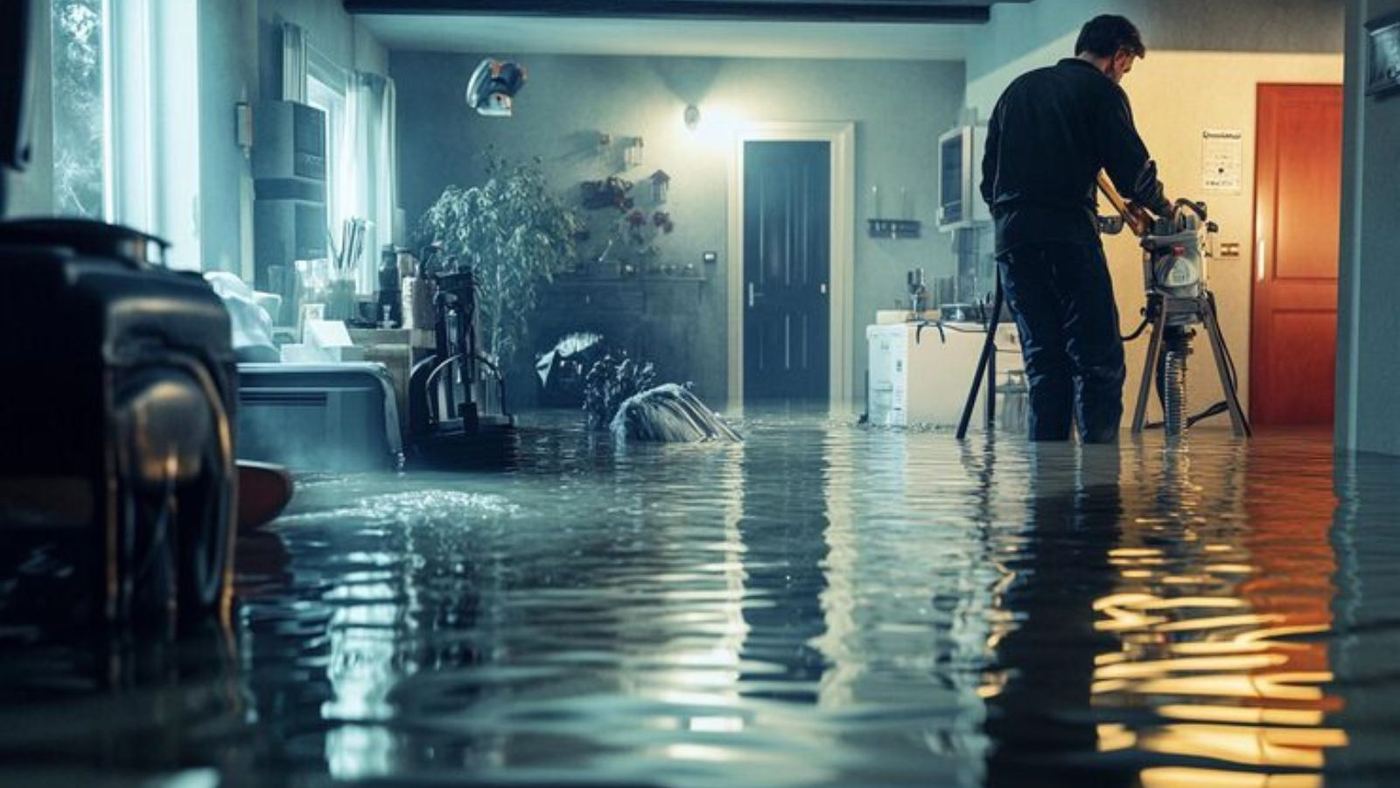
Step 1: stop the source
Nothing else works until the water stops. Close the supply valve at the fixture, or the main valve if you cannot isolate the leak. If the source is a roof leak or storm intrusion, a temporary cover keeps more water out until the repair.
In Culver City, the Golden State Water Company maintains water lines only up to the meter, according to its customer information. Leaks beyond the meter are the property owner's responsibility, so your plumber handles the line on your side. The utility lists a customer line at 1-800-999-4033 for questions about the meter.
Step 2: remove standing water
Standing water is extracted with pumps, truck-mounted units or portable extractors. The crew picks the equipment by depth and by what is underneath, such as carpet, hardwood or a slab.
This step is the most visible and the quickest. It also stops the water from soaking into more material, which is why emergency water removal is the first phase for any active flood or burst pipe.
Step 3: map the moisture
Moisture mapping finds the water you cannot see. Meters read moisture in drywall, wood and concrete, and a thermal camera shows cool, wet areas on surfaces. The crew marks the wet area on a floor plan or on the walls.
Ask to see the readings. They set the baseline for drying, and they prove later that the structure reached the dry standard.
Step 4: dry the structure
Drying is the longest phase. It follows a plan that is adjusted as readings change.
- Place equipment. Air movers and LGR dehumidifiers are placed to move air across wet surfaces and pull moisture out of the room.
- Open cavities when needed. Baseboards or small openings in drywall let air reach wet framing.
- Monitor and adjust. Readings are taken on later visits and equipment is moved to areas that remain wet.
- Confirm the dry standard. Equipment is removed only when readings reach the target for each material.
Wondering what step you are on?
Call the 24/7 line and describe where your job stands.
Step 5: clean and sanitize
Cleaning removes dirt, debris and bacteria left by the water. Hard surfaces are washed, antimicrobial products are used where the water category calls for it, and air treatment deals with odor.
Clean water may need a light wash. Contaminated water needs a thorough one. The water damage cleanup page explains how the crew decides, and the water category from ANSI/IICRC S500 is the guide.
Step 6: rebuild and Step 7: document
Rebuilding starts after the structure is dry. It means new drywall, flooring, trim and paint, as described on the water damage repair page. The scope and price are explained before the work begins.
Documentation runs through the whole job. Photos, readings, a drying log and a scope of work give you the records you need for your insurer and for your own files. Ask for copies as each stage finishes.
Questions to ask at each stage
A good crew expects questions. At the start, ask what the crew thinks caused the water and whether it has been stopped. During extraction, ask whether any materials will be removed and why. During drying, ask to see the moisture readings and what number means dry.
At the rebuild stage, ask for a written scope that separates drying from repair. That separation matters because the drying bill and the repair bill are often handled differently by insurers. Keep each invoice, photograph and reading together in a single folder.
How long each stage usually takes
Extraction and the first assessment often happen in a single visit. Drying commonly runs several days, and the exact time depends on the materials and how wet they were. Cleaning and sanitizing follow the drying, and rebuilding is scheduled once the structure reads dry.
Because every job differs, a fair crew gives a range and updates it as readings come in. Be wary of any promise of a fixed finish date made before anyone has measured the moisture.
Culver City permit notes for the rebuild
Some rebuild work needs a permit. The city's Building Safety Division lists new or replacement water piping, sewer line repair or replacement and wall replacement among work that needs one, and it lists stopping leaks without replacing pipe and minor sheetrock repair as not needing one.
The list is not exhaustive, so call the division at (310) 253-5800 about your scope. If your home is near the coast, the process differs in Marina del Rey because it is unincorporated.
Related pages
Read more about water mitigation and water damage repair, see how dispatch works in Marina del Rey, or check the service areas page for coverage.
Talk to dispatch about your situation
Call the 24/7 line and describe what you see. Scope and price are explained before work starts.
Restoration steps questions from Culver City
Stop the source. Close the supply valve or the main shutoff, then call a crew. Everything else follows from that.
It varies. Water removal takes hours, drying takes days and rebuilding can take days or weeks depending on scope. Readings and the written scope set the timeline.
Not always. Many jobs let you stay, though contaminated water, heavy demolition or loud equipment may make a temporary move easier.
Golden State Water says it maintains lines up to the meter, and leaks beyond the meter are the owner's responsibility. A plumber repairs your side.
After drying readings reach the dry standard and any cleaning and repair is finished. The crew tells you when it is safe.