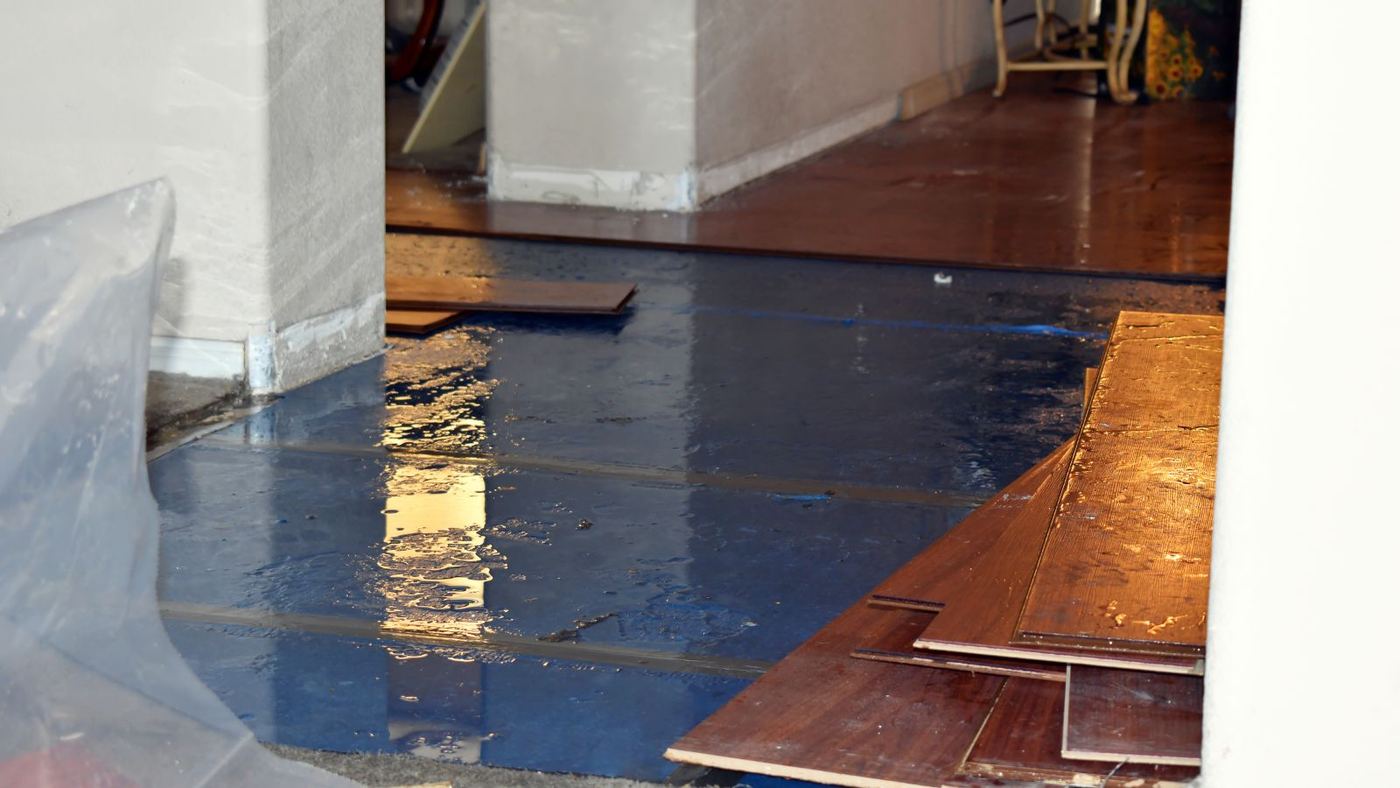
How water changes hardwood
Wood absorbs moisture from the bottom and the edges first. The underside of a board swells, the edges rise and the floor cups. If the surface is sealed, water enters through gaps between boards and under the floor.
That is why a floor can look flat after a leak and then cup days later, once the moisture has traveled. Wait to judge the damage until the moisture source is stopped and the floor has dried at a steady pace.
Signs of damage and what they usually mean
Different shapes tell different stories about the water.
| Sign | Usual cause | Common next step |
|---|---|---|
| Cupping at board edges. | Moisture from below or high humidity. | Dry slowly and recheck flatness. |
| Crowning in the center. | Floor sanded while still wet, or drying from the top. | Dry fully before any sanding. |
| Gaps between boards. | Boards shrank after drying. | Wait for stable moisture, then decide on filler or refinishing. |
| Black or dark stain. | Long exposure or mold. | Boards are often replaced. |
| Boards loose from subfloor. | Adhesive or nails failed. | Replace affected sections. |
What to do in the first days
These steps help a floor recover, and they are safe for homeowners.
- Stop the water. Fix or isolate the leak. Mop up any surface water.
- Lift items. Remove rugs, mats and furniture so air can reach the floor.
- Call for readings. A moisture meter shows how wet the boards and the subfloor are, and that guides the drying plan.
- Dry slowly. Dehumidification and gentle airflow are used. Heating a floor quickly can warp it.
- Wait before sanding. Sanding while the floor is still wet leads to gaps and re-cupping.
Can the floor be sanded and refinished?
If the boards are structurally sound after drying, sanding and refinishing can level mild cupping and restore the finish. The floor needs enough wear layer left, and it must be dry throughout.
A refinishing crew will measure moisture first and often waits days or weeks after drying to confirm the floor is stable. Ask how they confirm that and what they do if the floor re-cups. Water damage repair on a floor usually follows water mitigation, because drying is the foundation of any repair.
Not sure if your hardwood can be saved?
Call the 24/7 line and ask for a moisture check.
When replacement is the right call
Replacement makes sense when boards are cracked, stained black, loose or severely cupped after drying. It also makes sense when a floor stayed wet for so long that mold or rot has set in.
A repair crew will remove the damaged section and replace it with matching boards, then blend the finish. Matching an older floor takes care, and a test patch is a good idea. The water damage repair page explains how scope and price are set before work begins.
Subfloor and underlayment
The subfloor is often the hidden problem. Plywood and underlayment that soaked can stay wet long after the boards look dry, so readings on both layers matter. If the subfloor is damaged, it is cut back to sound material before new boards go down.
Any wood floor over a slab or a raised foundation has its own moisture story. A crew checks the layers and does not guess based on the surface alone.
Why hardwood reacts slowly and then all at once
Wood takes on water gradually and gives it up gradually. A floor can look fine on the first day and cup or crown a week later as moisture works through the boards. That delay is why a moisture reading matters more than how the floor looks.
Finish also changes the story. A sealed top surface slows water getting in from above but can trap moisture that arrives from below, so the board dries unevenly and stresses the glue or nails holding it.
Habits that protect a hardwood floor
These help before and after a leak.
- Wipe up spills from dishwashers, refrigerators and plants right away.
- Check under sinks and behind appliances for slow drips twice a year.
- Keep indoor humidity steady with ventilation and a dehumidifier when needed.
- Use mats at entries and under planters.
- Do not seal a damp floor with a new finish.
Culver City notes for floor repairs
The Building Safety Division's permit list names remodel or alteration, termite or dry rot repair and wall replacement among work that needs a permit, while it lists painting and minor sheetrock repair as exempt. Floor refinishing is not named on that list, so ask the division about subfloor replacement and anything that touches framing.
Call (310) 253-5800 before work begins. If you live in a multi-unit building in Marina del Rey or Culver City, read your lease or association rules on flooring, because they may add steps the city does not.
Related pages
Read more about water damage repair and water mitigation, see how dispatch works in Marina del Rey, or check the service areas page for coverage.
Talk to dispatch about your situation
Call the 24/7 line and describe what you see. Scope and price are explained before work starts.
Hardwood floor water damage questions
Mild cupping can ease as the floor dries slowly and evenly. Do not judge it until the moisture is stopped and the floor has dried.
Until readings show the boards and subfloor are dry and stable. The crew or refinisher confirms that with a meter.
Gentle airflow is fine, but rapid heating can warp wood. A dehumidifier is more effective than a heater.
It depends on the cause and your policy. Sudden and accidental damage is often covered and gradual leaks often are not. Ask your insurer.
Refinishing is not named on the Building Safety Division's list, but subfloor or framing work may be. Ask the division at (310) 253-5800.