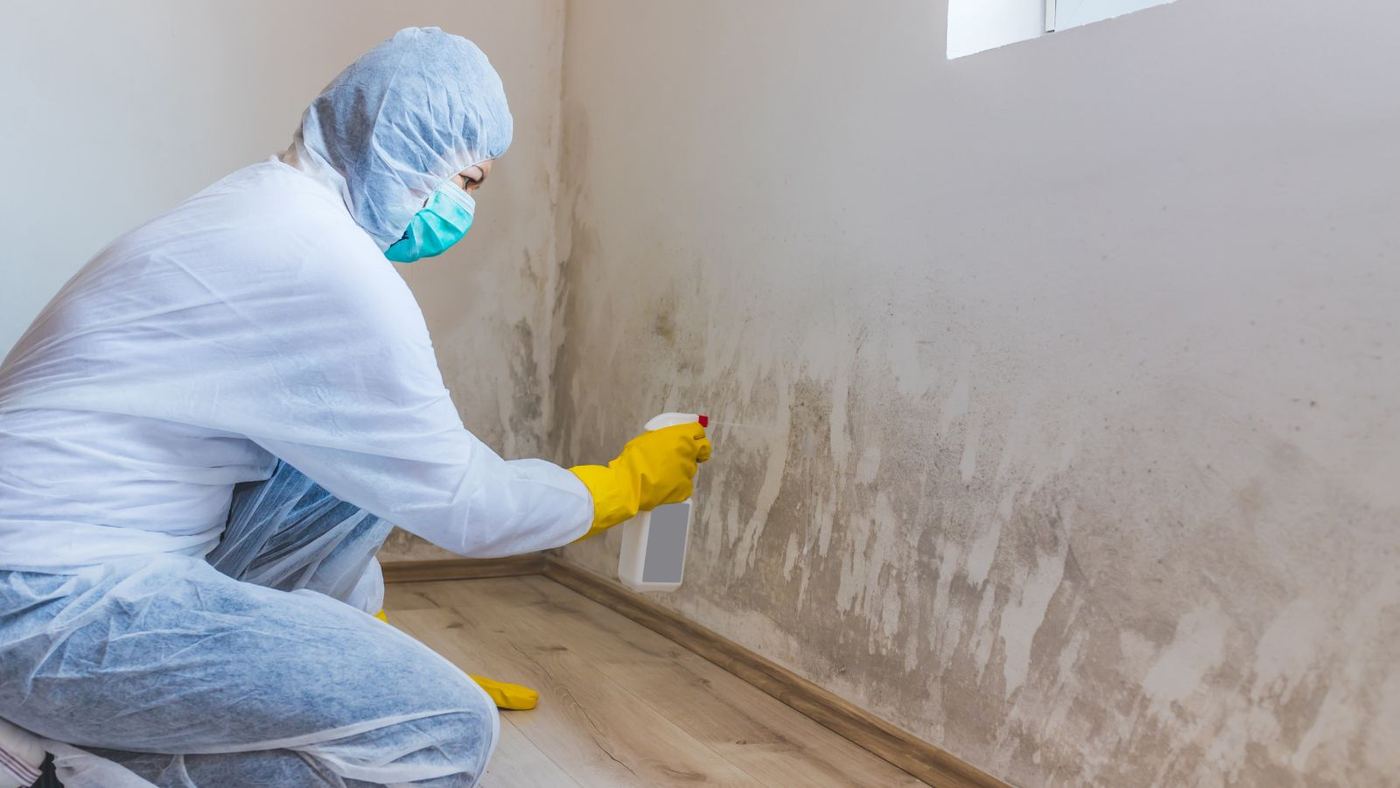
Step one is always the water
Cleaning mold without fixing moisture is a temporary fix. The EPA's guidance is blunt: the key to mold control is moisture control. Find the source, whether it is a plumbing leak, a seep through a wall or slab, a clogged drain or condensation, and stop it.
Then dry the space. A dehumidifier, steady airflow and removal of wet materials all help. If walls are wet inside, the crew may open them to reach the framing. Once everything is dry, the mold problem becomes a cleaning and removal problem.
Homeowner cleanup or professional remediation?
This table is a rough guide. It does not replace an inspection.
| Situation | Homeowner can often handle | Call a crew |
|---|---|---|
| Small spots on tile, concrete or sealed surfaces. | Yes, with gloves, a mask and eye protection. | If it keeps returning. |
| Growth on drywall or ceiling tiles. | No | Yes, material is usually removed. |
| Musty smell with no visible source. | No | Yes, inspection is needed. |
| Growth after sewage or floodwater. | No | Yes, contaminated materials need protective gear. |
| Large area or multiple rooms. | No | Yes, containment and removal are needed. |
How professional removal works
A crew follows a sequence that keeps spores contained. The standard that guides this work is ANSI/IICRC S520.
- Inspect and plan. The crew locates the source and defines the affected area, then explains the scope and price.
- Set containment. Plastic barriers and negative air machines with HEPA filtration separate the work area.
- Remove damaged materials. Mold-damaged drywall, insulation and trim are cut out and bagged.
- Clean what remains. HEPA vacuuming and wiping clean framing and hard surfaces.
- Dry and verify. Materials are dried and, if you wish, an independent party tests afterward.
Want a crew to look at your mold?
Call the dispatch line to arrange an inspection.
Common mistakes that make it worse
These errors appear again and again.
- Painting over mold or using primer alone, which traps moisture.
- Scrubbing dry mold without protection, which spreads spores.
- Relying on bleach alone, which does not reach growth inside porous materials.
- Running fans across growth, which blows spores into other rooms.
- Skipping the moisture fix, so the mold comes back.
Safety and protective gear
Wear an N95 respirator or better, gloves and eye protection when cleaning small areas. Keep children and pets out of the room, close doors and avoid using the central air system while you work.
If you have health concerns, talk to a physician before doing the work. A contractor cannot give medical advice, and mold health questions belong to a doctor.
Keeping it from coming back
No one can promise mold will never return, because new moisture can restart the problem. The best protection is a dry space, with drainage that moves water away, working ventilation and quick attention to leaks.
After remediation, watch the area for new stains or smells. If the problem returns, the moisture source was not fully fixed. The water mitigation page explains how drying is measured, which helps confirm a space is dry before it is closed up.
What a cleanup day looks like for a homeowner
For a small hard-surface job, set up first. Put on a respirator, gloves and eye protection, cover vents, open a window if the weather allows and bag all cleaning materials before moving them through the house. Work from the cleaner area toward the dirtier area.
Wipe the surface with detergent and water, let it dry fully and watch it for a week. Do not use a vacuum without a HEPA filter, because ordinary vacuums can blow spores back into the room. If the spot returns, stop and call for an inspection.
Culver City: permits and where to ask
Cutting out drywall is not the same as removing a wall. The Building Safety Division's permit list names wall replacement or removal as work that needs a permit and minor sheetrock repair as work that does not. The division's page says its list is not exhaustive.
The division offers virtual appointments for questions about permits and building codes, and its phone number is (310) 253-5800. If your lower room is in Marina del Rey, where the county, not the city, handles permits, ask the county. The service areas page lists coverage.
Related pages
Read more about mold remediation and water damage cleanup, see how dispatch works in Marina del Rey, or check the service areas page for coverage.
Talk to dispatch about your situation
Call the 24/7 line and describe what you see. Scope and price are explained before work starts.
Mold removal questions from Culver City homeowners
Small surface patches on hard materials can sometimes be cleaned with protection. Growth in drywall, insulation or wood, or in large areas, needs a crew.
They may affect the surface, but they do not fix moisture or reach inside porous materials. Use proper methods and fix the water first.
Visible growth is removed, the area is dry and no smell remains. Independent clearance testing can confirm results if you need it.
Not if the moisture is fixed and the space stays dry, but nobody can promise it will never return.
Minor sheetrock repair is listed as not needing a permit, and wall replacement or removal is. Ask the Building Safety Division at (310) 253-5800 about your scope.