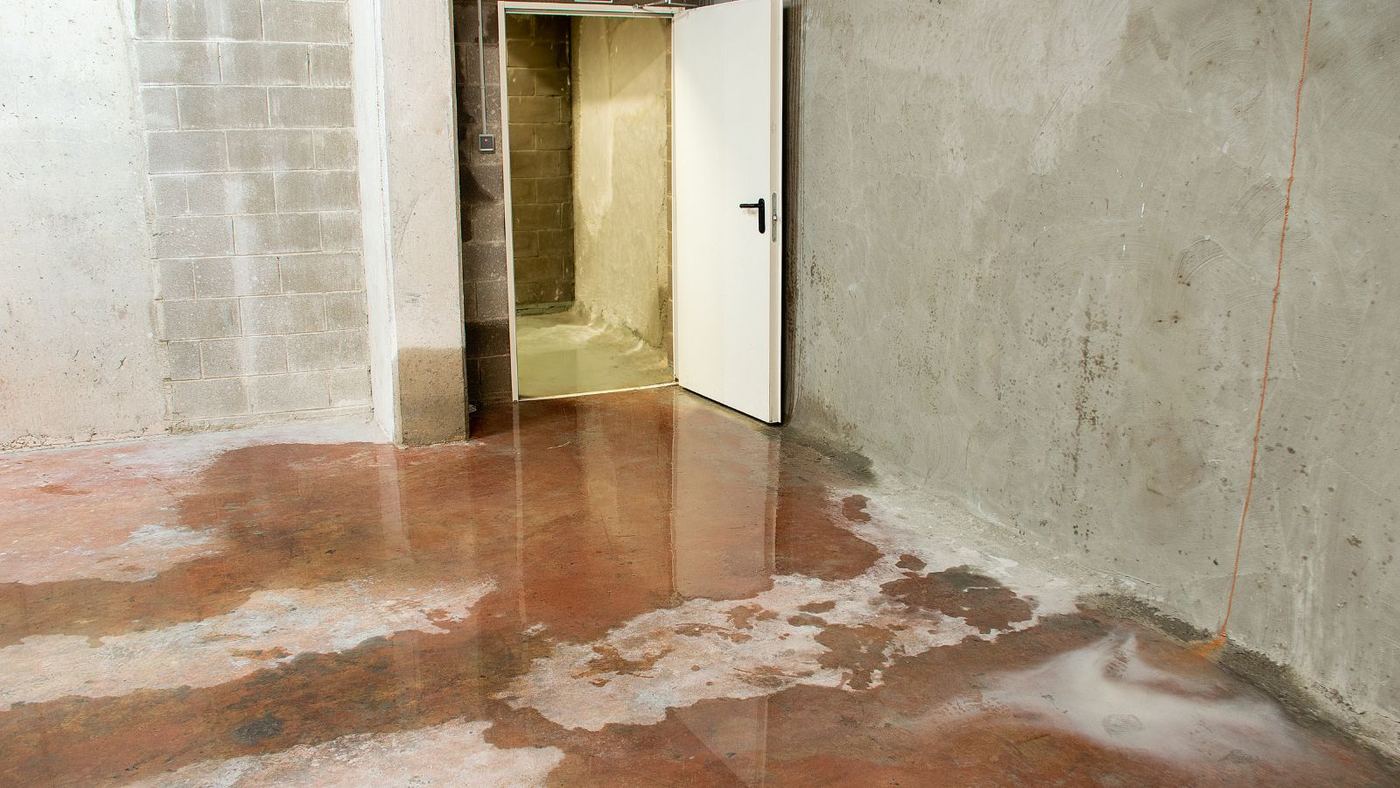
Why below-grade spaces grow mold
Spaces that sit below the surrounding ground collect water from rain, irrigation and plumbing, and they have little airflow. Concrete walls and slabs absorb moisture and release it slowly. Stored cardboard, fabric and wood give mold something to eat.
The EPA says the key to mold control is moisture control. That sentence guides the rest of this article. If you cannot control the water, no cleaner or coating will keep mold away.
Moisture control checklist
Use this checklist twice a year and after heavy rain.
- Clear gutters, downspouts and drains so water leaves the structure.
- Check that soil and paving slope away from walls and window wells.
- Look for stains, efflorescence or a musty smell on walls and slabs.
- Keep stored items off the floor and away from walls.
- Use a dehumidifier in lower rooms and empty it often.
- Test sump pumps and check that discharge lines drain away from the building.
Moisture sources and fixes
Match what you find to the likely fix. A crew can confirm with a moisture meter.
| What you see | Likely source | Typical fix |
|---|---|---|
| Damp wall near grade. | Surface water or poor drainage. | Regrade, extend downspouts, clear drains. |
| Floor slab feels cool and damp. | Moisture through the slab or humidity. | Dehumidify, seal if needed, check plumbing. |
| Musty smell after rain. | Water entering at window wells or cracks. | Repair, protect window wells. |
| Wet drywall at the baseboard. | Plumbing or appliance leak. | Repair the leak, dry and remove wet material. |
| Condensation on cold pipes or ducts. | Humid air meeting cold surfaces. | Insulate, ventilate and dehumidify. |
Dehumidification and airflow
A dehumidifier sized for the room does more than fans. Keep doors open between rooms so air moves, and avoid sealing a damp room with stored goods stacked against walls. If the room smells musty even with a dehumidifier running, a moisture source is still active.
Fans and dehumidifiers help with humidity, but they will not dry a wet wall cavity. If the wall itself is wet, you are looking at water mitigation rather than routine upkeep.
Seeing signs of mold in a lower room?
Call dispatch to talk through inspection and moisture checks.
After storms and flooding
Heavy rain tests lower levels. Check window wells, garage thresholds and floor drains after storms. If water entered, dry the area within 24 to 48 hours, which is the window the EPA recommends for water-damaged areas and items.
If water is deeper than a damp patch or came up through a drain, treat it as contaminated and call a crew. Flood damage restoration covers pumping, cleaning and drying for those cases, and mold remediation follows if growth has started.
When mold is already there
Do not scrub or paint over mold, and do not disturb it more than necessary. Find and fix the water first, then plan removal. Small, surface patches on hard materials sometimes clean up with proper methods, while growth in drywall, insulation or wood usually needs the material removed.
The mold remediation page describes containment, removal, cleaning and drying. Ask whether the crew's work follows ANSI/IICRC S520, the published standard for mold remediation.
Safety checklist for lower rooms
Check these before you enter or work in a damp lower room.
- Turn off power to the room if outlets or equipment are wet, and call an electrician if you are unsure.
- Never enter a flooded subterranean garage, as the Culver City Fire Department advises.
- Wear a respirator, gloves and eye protection when you disturb damp or moldy material.
- Keep fuel-burning equipment and generators outdoors.
- Use a second person or a phone check-in when you work alone in a below-grade space.
A seasonal routine for lower rooms
Before the rainy season, walk the property. Clear gutters and downspouts, make sure they discharge away from the foundation and check that window wells and area drains are free of leaves. Test any sump pump by pouring water into the pit and watching it run.
After heavy rain, check the lowest rooms for damp smells, wet carpet edges and condensation on cold walls. Early signs are easier to fix than a hidden problem. Keep stored items off the floor and away from exterior walls so air can move.
Humidity quick guide
A hygrometer costs little and tells you what the air is doing.
| Reading | What it suggests | Action |
|---|---|---|
| Below about 50 percent. | Comfortable range for most homes. | Keep ventilation and routine checks going. |
| 50 to 60 percent. | Watch closely | Add a dehumidifier and look for sources. |
| Above 60 percent. | Mold-friendly conditions | Find the moisture source and dry the space. |
Culver City guidance for below-grade spaces
The Culver City Fire Department's storm guidance for below-grade areas is practical. It advises residents to place sandbags or permanent barriers at subterranean driveways, window wells and vents, to move heating and mechanical equipment out of below-grade areas to at least one foot above ground level and to service or install sump pumps in subterranean parking.
It also says not to enter flooded subterranean garages, lobbies or any below-grade part of a building. For a blocked street catch basin that sends water toward your property, the department lists Public Works at (310) 253-5635. See the service areas page for where we work.
Related pages
Read more about mold remediation and flood damage restoration, see how dispatch works in Marina del Rey, or check the service areas page for coverage.
Talk to dispatch about your situation
Call the 24/7 line and describe what you see. Scope and price are explained before work starts.
Basement and lower-level mold questions
If you have a basement, a below-grade garage, a crawl space or a lower room against a slope, yes. The principles are the same for any space that stays damp.
It controls humidity, but it will not fix leaks or dry a wet wall. Use it with drainage and leak repairs.
A musty smell means moisture and possibly mold, but only an inspection or testing can tell. Look for stains and growth, and check for leaks.
Check for water, dry anything wet within 24 to 48 hours and call a crew if the water was deep or contaminated.
The fire department's storm page lists Public Works at (310) 253-5635 for blocked street catch basins. Call if one sends water toward your property.